advice on septic tank maintenance, repair, installation and emptying in Essex

|
|||
|
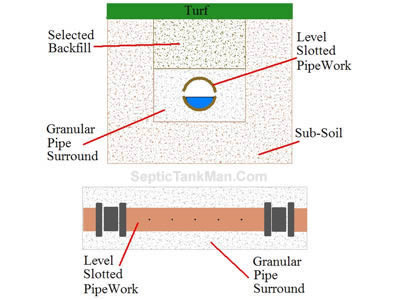 |
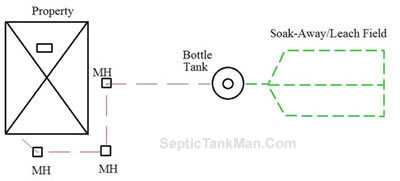
This of course will never happen unless you employ laser levels and satellites but you get the general idea, but by using this method of installation you allow the waste water to soak into a larger area which in turn helps with the breakdown of the waste water and prolongs the life of the system
Why septic tank soak-away systems fail
The original systems worked for many years but there comes a time when they fail, this can be down to several reasons.
The sub-soil around a soak-away can seal due to grease, fat and fibres passing through the tank and this is why you should have dip pipes and a well constructed filter system in place, blockages can occur due to tree root ingress and impact damage to pipes, traditional butted land drains often used in the construction of soak-away's can silt up and block
A sudden change in a properties occupancy can overload the soak-away, a family of five moving into a property previously occupied by an older couple can have a dramatic affect on the volume of water used, the ground can become saturated due to prolonged and heavy rainfall or a shift in a ground water table can also overload the system.
The early warning signs that the soak-away is failing
There are the obvious signs like having a lake of sewage appear at the bottom of the garden or the septic tank overflowing, if the septic tank requires emptying more frequently then usual or water enters the tank from the outlet during the emptying process, this usually indicates that something is amiss with the soak-away system.
Investigating a suspect soak-away system
It is always worth having the outlet high pressure water jetted on the off chance that a simple blockage has occurred in the soak-away system, after that it is usually time to get the shovels out of the van. Typically we would carry out a sonar trace from the tank or from an excavation on the outlet of the tank and again excavate at the point that the sonar trace finished.
This will give you an idea of the extent and construction of the original system and the ground type you are working in, from this point a decision can be made as to whether to extend the existing system or take a different path.
Repairing a defective soak-away system
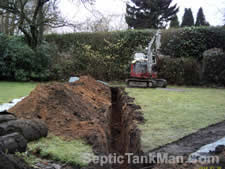 In most cases we can extend existing systems using modern materials, given the correct ground type and a big enough area to work in. On occasions it may be necessary to install a pump chamber on the outlet of a septic tank in order to lift the waste water into a more suitable area or to utilise any good quality top soil that may be covering a clay based sub-soil.
On other occasions where the ground is just not suitable for a traditional soak-away or the final product finds its way through to a water course of some description then the tank may need to be upgraded by either conversion into or the installation of a treatment plant.
The repair of a soak-away system or even the installation of a new tank does not have to be a traumatic experience for even the keenest of gardeners, as they see their lawn being carved up by a horde of tea drinking drainmen.
By using boards and sheeting all surface areas can be protected and there are small tracked excavators that again can be placed on boards to protect patios and lawns. There are many occasions where we can not access site with a machine and all the work is done by hand, a carefully excavated lawn will be back to normal in a couple of weeks given the right weather conditions.